 Default Currency
 Canada

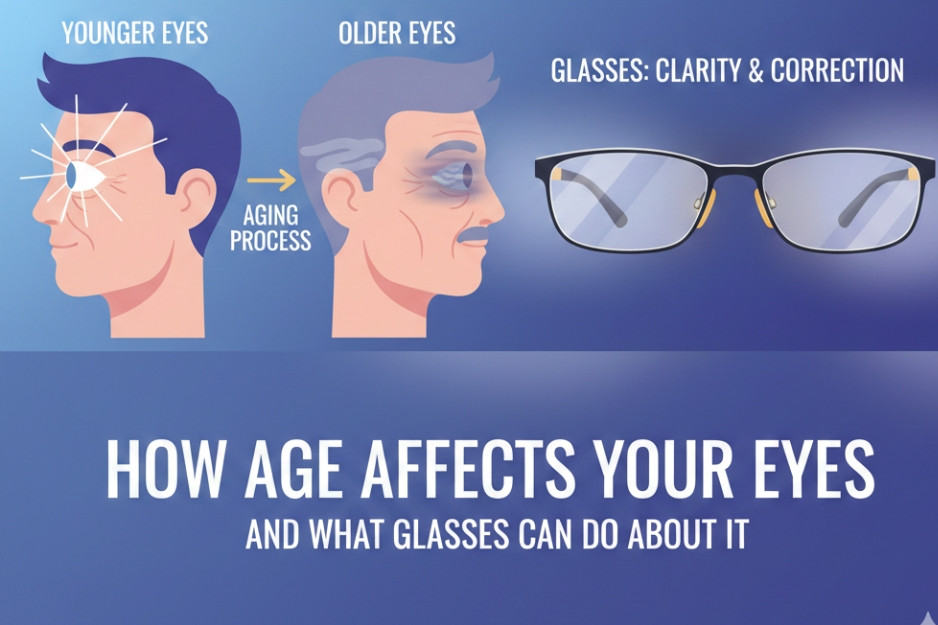
Vision changes are a slow process of ageing, just like other body parts. Though we know the fact, keeping up with vision challenges becomes difficult as you do not understand what happens to your eyes as you get older. This understanding will surely help you protect your eyes and overcome eye problems by choosing the correct eyeglasses.
As reading and using digital screens remains an inalienable part of our lives, early diagnosis of vision problems due to ageing helps in addressing the common eye problems with age. This slows down the progression and also prevents complications like permanent vision loss and further weakening of eyesight over time. Most of these problems can be corrected with reading glasses for seniors or of different magnification strengths, such as prescription lenses, bifocal lenses, and specialized eyewear.
What happens to your eyes as you get older?
Here are some common changes in vision that slowly start with age:
Presbyopia
As you age natural lenses of the eyes become harder, leading to difficulty reading from close up. This condition usually starts around the age of forty and progresses till the age of sixty-five. This is the reason you need reading glasses as you age, especially with blue light filter lenses.
Eye Dryness
Due to aging, natural tear production, which causes lubrication of the eyes, is reduced. This leads to increased inflammation, blurred vision, and poor eye health. The problem is more common among senior women due to hormonal imbalances.
Cataract
Cataract is one of the most common eye problems why vision gets worse with age. A film of proteins gets deposited over the natural lens of the eyes, leading to foggy vision, glare, faded colors, and halos around light.
Macular Degeneration
A slow degeneration leads to macular weakening, affecting the central part of the retina, which distorts the vision. Such patients find it hard to watch TV clearly. Dry macular degeneration can lead to significant loss of vision in 5-10 years, even causing permanent eyesight loss.
Other Age-Related Eyesight Problems
Since muscles controlling the pupil weaken with age, the eyes become less responsive to light. This also leads to photosensitivity and poor reading capability. This is the reason seniors need brighter light (particularly daylight) for reading. Another common ageing problem that damages vision is decreased contrast perception, which minimizes the differentiation capability between shades. This severely affects driving capability, climbing stairs, and identifying potholes. Next comes the frequent appearance of floaters, which is mainly caused by poor lubrication of the eyes due to aging. The extreme case of age-related vision loss is Glaucoma, which causes peripheral vision loss. Though these problems are serious and cannot be ignored, they can be conveniently addressed through corrective lenses and early diagnosis. This helps in keeping natural vision functional till the last stage of life and reducing dependence of the elderly on assistance.
Age-Related Eye Problems & How Eyeglasses Can Help
|
Age-Related Eye Problems |
Symptoms |
How Glasses Help |
|
Presbyopia |
Difficulty reading from close up |
Bifocal reading glasses |
|
Cataracts |
Cloudy vision |
HD anti-glare lenses |
|
Dry Eyes |
Blur vision |
Blue light filter eyeglasses |
|
Reduced Contrast Perception |
Difficulty driving, night perception |
Tinted/Contrast lenses |
|
Macular Degeneration |
Blur central vision |
Magnification lenses |
How Eyeglasses Can Help with Age-Related Eyesight Loss
The reading glasses can help with most vision problems, like presbyopia.
Reading Glasses for Presbyopia:
To help you easily navigate through phone checking tickets and reading a bedtime poetry book, reading glasses for seniors are quite handy. They are fitted with bifocal lenses that help magnify close-up text and improve vision while reading.
Progressive Lenses
For aging problems, progressive lenses play a significant role in addressing the eyesight problem. They provide a smooth transition between parts with different focal lengths, correcting near or farsightedness.
Eyeglasses for Glare and Blue Light
Are you still wondering, “Why do you need reading glasses as you age?” Keeping reading. To reduce eye strain in old age and let you easily navigate through the phone screen, anti-blue light lenses are a great help. They are specifically helpful for seniors with dry eyes and photosensitive eyes.
Prescription Lenses
To minimize the disease symptoms and help you with vision, ophthalmologists often prescribe special lenses like particular tints, coatings, and lens shapes that can increase the field of view. For example, amber-tinted eyeglasses help with contrast perception, specifically during night driving. The HD lenses enhance sharpness while the anti-glare polarized lenses minimize halos. These lens adaptations are very helpful in reading glasses for seniors.
In A Nutshell
Life is mortal, so ageing is inevitable. As our eyesight starts weakening due to age-related changes, addressing them is essential to prevent further vision loss. Most of the aging-related eye sight problems can be addressed with specialized lenses and reading glasses. They enhance the overall quality of life by improving vision and giving you freedom in day-to-day life.